Before I get into this I want to say something that I mean genuinely — I feel lucky. I know that sounds strange for someone with stage 4 cancer on a drug combination with a long list of side effects. But hear me out.
The haemorrhage that sent me to hospital in August 2024 was terrifying. But if it hadn't happened, the tumour on my kidney would almost certainly have gone undetected until it was far too late. The haemorrhage found it. In a horrible, painful, frightening way — but it found it. That's lucky.
And the fact that my type of cancer responds to immunotherapy rather than chemotherapy — I've seen what chemotherapy does to people. I'm not experiencing that. That's lucky too.
My treatment — what I'm actually on
I'm on a combination of two drugs. Nivolumab — an immunotherapy drug given as an infusion at the hospital — and Cabozantinib — a targeted therapy known as a TKI (tyrosine kinase inhibitor) which I take as a tablet once a day at home. Together they work as a double headed attack on the cancer. The Nivolumab helps my immune system recognise and fight the cancer cells. The Cabozantinib targets the blood supply that feeds the tumour and helps slow its growth.
It's a powerful combination. And it comes with side effects. Here they are — all of them, honestly.
Dry skin Mild — manageable
My skin has become very dry throughout treatment. The build up around my nose and ears in particular can get sore — almost crusty at times. My skin also bleeds much more easily than it used to. A small knock that would previously have been nothing can now break the skin. Healing is also significantly slower — a small cut that used to be gone in a few days now takes a few weeks to fully clear up. Moisturising regularly helps.
Sore feet Occasional flare ups
This is probably the most disruptive side effect I get. The edges of my feet in particular become sore — usually feeling like a callous forming. On bad days it feels like a hot needle being poked into the sole of my foot and walking properly becomes genuinely difficult. I treat it with a 25% urea cream to soften the skin, which helps significantly. After a while it calms down on its own. It comes and goes without much pattern.
Dry mouth and claggy food textures Constant — adapted to
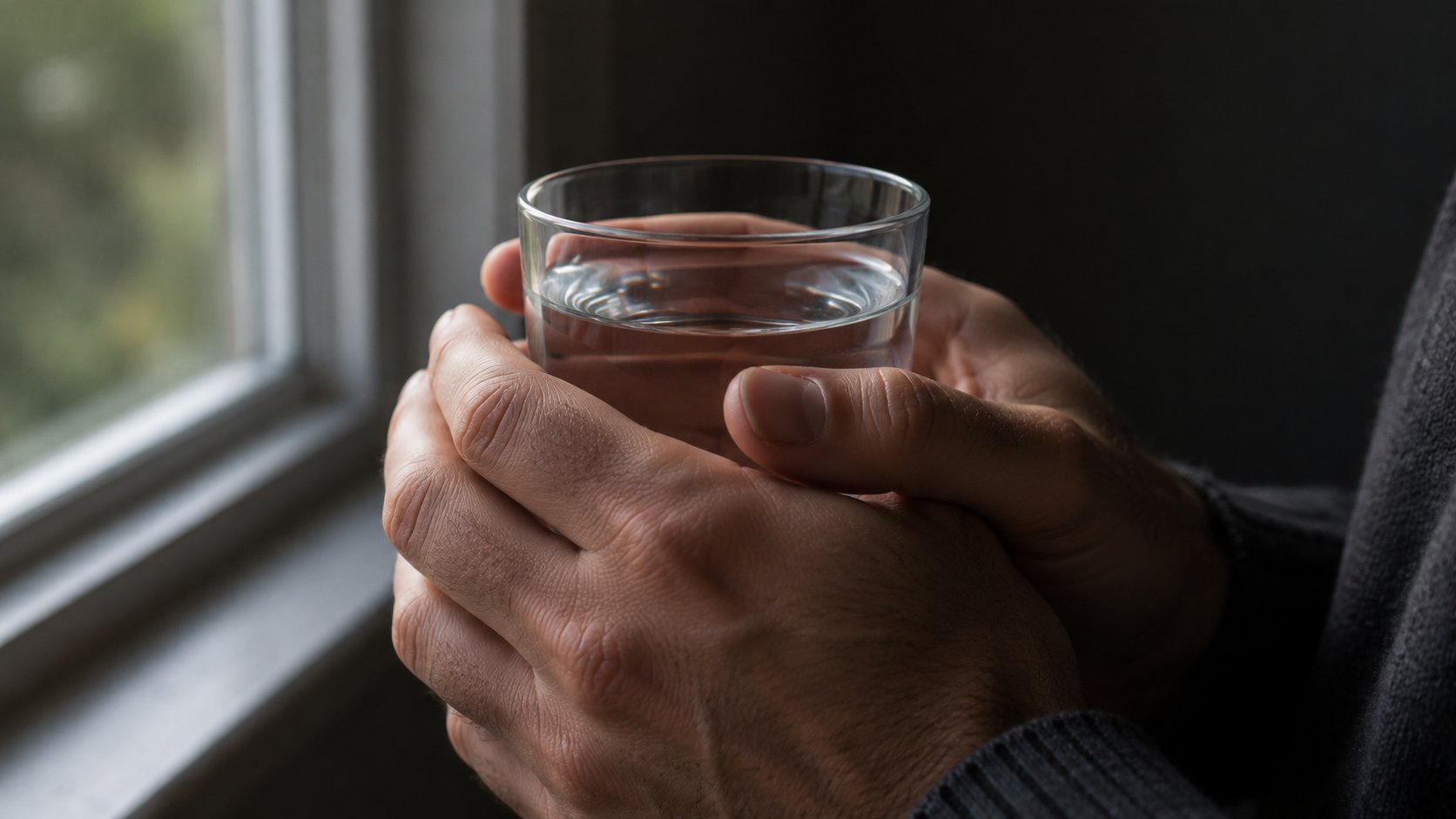
I drink copious amounts of water because my mouth is always dry. This can cause a persistent cough and a feeling that my throat is tightening if I talk for too long — which my wife has mixed feelings about. The dryness also changes how food feels in the mouth. Textures that used to be enjoyable have become unpleasant — chocolate in particular has become almost impossible to eat, which is not entirely a bad thing given everything I've said about sugar. A lot of foods I used to eat just feel claggy now and I've naturally moved away from them.
Sore throat Mild — improved over time
Early in treatment my throat felt like it was closing up when I swallowed. Over time that has improved significantly — whether my body has adapted or the effect has lessened I'm not sure, but it's much less of an issue now than it was at the start.
Bleeding gums Mild — ongoing
My gums bleed every single time I brush my teeth. Every time, without fail. Sometimes my teeth feel a little loose which is an unsettling feeling — but when I check them properly they're fine. It's the gums rather than the teeth themselves. Manageable but something I've had to get used to.
Sleep disruption Mild — ongoing
I often wake in the early hours and don't sleep as deeply as I used to. Whether this is the medication, the diagnosis, or just life — I'm genuinely not sure. But my sleep quality has changed since starting treatment. I manage it by not fighting it — if I'm awake early, I'm awake. Sometimes that's when I meditate.
Fatigue Mild — much better than most
This is where I feel most lucky compared to what I hear from others on similar treatment. On infusion days I need a nap — a few hours after coming home from hospital. But on normal days I function well. I don't need afternoon naps as a rule. My energy levels are reduced compared to before — the smaller battery I've talked about — but I cope well. If I need a nap I'll take one without guilt, but most days I don't need to.
Bowel unpredictability Occasional — sometimes dramatic
I'll be honest about this one because I think it's important and nobody talks about it. My bowels are completely unpredictable. Most of the time they're absolutely fine. And then — without warning and without any obvious pattern — it's like Niagara Falls. It passes within a few hours and everything goes back to normal, but in the meantime it requires swift action and a certain amount of dignity management.
I'll give you an example. I once thought I was about to fart in the middle of a shop. My body had other ideas. It was a shart. A full, committed, unmistakeable shart. In a shop. I've made peace with it.
I try to avoid fatty foods like melted cheese as they seem to be a trigger, but there's no reliable pattern. I could take anti-diarrhoea tablets but I don't want to swing the other way into constipation, which would be considerably worse. So I manage it, stay aware, and never stray too far from a toilet on uncertain days.
Every single one of these side effects is manageable. And I can cope with every single one of them because the alternative — not being treated, not being here — is not worth thinking about.
I wrote this post because when I was first told what I'd be taking, I searched everywhere for an honest, plain English account of what Nivolumab and Cabozantinib actually feel like from the inside. I didn't find one. So here it is. If you're about to start this combination, or you're on it and wondering if what you're experiencing is normal — I hope this helps.
You're not alone. And for most people, it is manageable. It really is.
This is my personal experience of these medications only. Side effects vary enormously between individuals. Please always discuss any symptoms with your oncology team — some side effects can be serious and require medical attention. Never stop or change your medication without consulting your doctor.
— Nick