I didn't go looking for reflexology. Catherine found it — she heard through someone she knew about a charity offering a block of six free reflexology sessions for stage 4 cancer patients. She mentioned it and I said yes. That's pretty much how it started.
I've always been fairly open minded about this kind of thing. I wasn't going in with any great expectations, but I wasn't sceptical either. My approach to anything that might help with the stress or the symptoms has always been the same — if it's not going to harm me, it's worth trying. What did I have to lose?
What a session actually involves
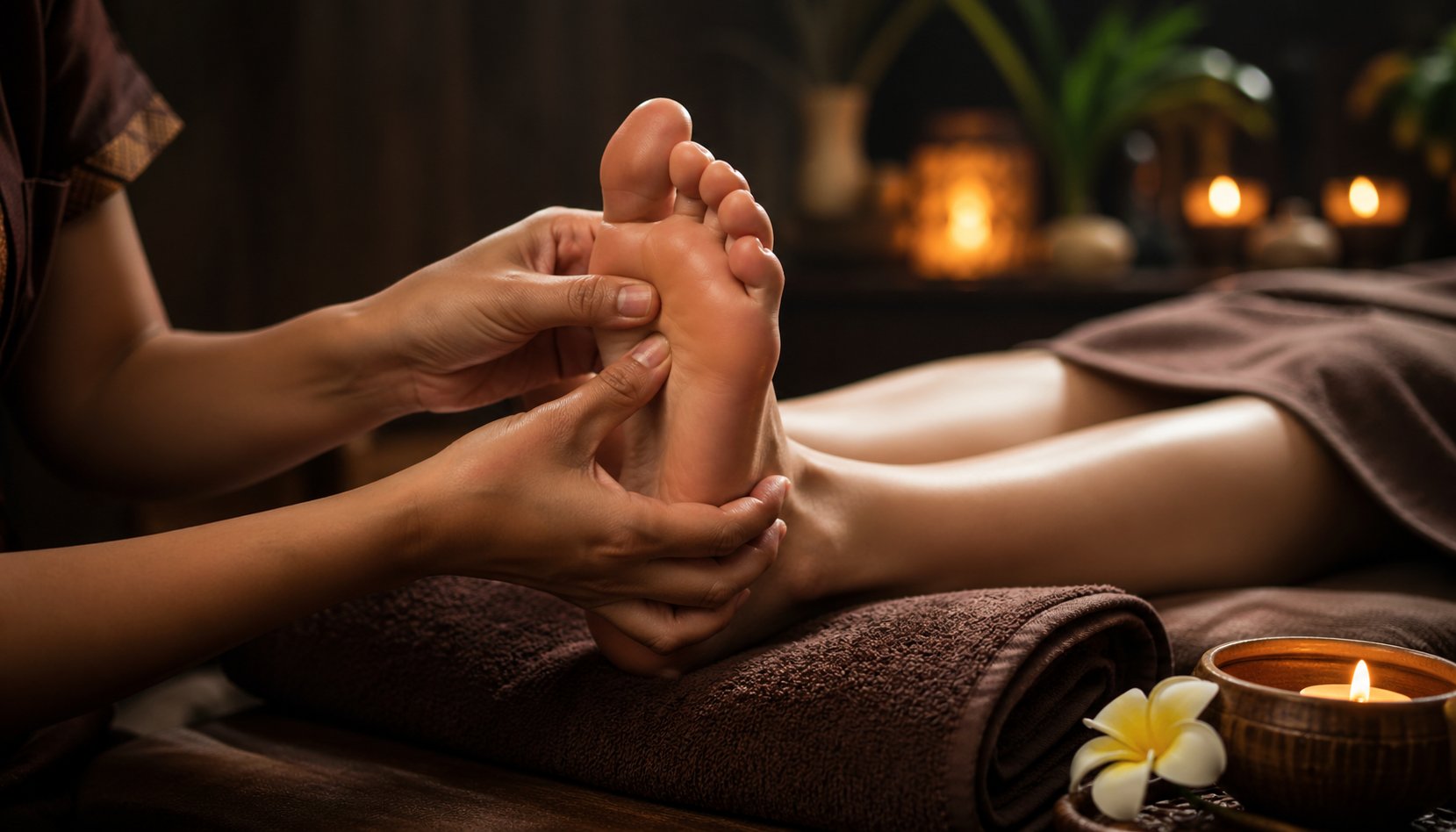
A reflexology session is built around pressure points in the feet. The idea is that different areas of the feet correspond to different organs and systems in the body, and by applying precise pressure to those points a practitioner can both read what's going on in the body and help encourage it to function better. That's the simplified version — there's a lot more depth to it than that, but that's the essence of it.
In practice, a session with my reflexologist Gayle involves a lot of conversation alongside the treatment itself. We chat while she works through the pressure points, and that combination — the physical and the conversational — has turned out to be more valuable than I expected from either one alone.
In one of our early sessions, Gayle was able to tell me which kidney I was missing just from working on my feet. I hadn't told her. She found it herself. That was the moment I stopped thinking of this as something to simply try and started taking it seriously.
She knows things about my body that I don't tell her
That kidney moment wasn't a one off. Gayle can tell when I'm struggling with my bowel — a side effect of the treatment that comes and goes — just from what she feels through my feet. She picks up on things I haven't mentioned, sometimes things I've barely noticed myself. Whether you believe in the theoretical framework behind reflexology or not, that's hard to dismiss.
It's given me a different relationship with my own body. A greater awareness of what's going on in there, and a sense that there are ways of understanding and addressing it that conventional medicine doesn't always reach.
The part nobody really talks about
Here's the thing about living with a serious illness that I think is underappreciated — there are things you can't say to the people closest to you. Not because they won't listen, but because they're too close. Catherine, the girls — they're living this too, in their own way, and there are thoughts and fears I carry that I don't want to put on them. They have enough.
Gayle has become someone I can talk to without that filter. The conversations we have during sessions cover things I wouldn't bring up at home — worries, frustrations, the darker thoughts that come with a diagnosis like mine. Having that space, that outlet, has been genuinely important for my mental health in a way I didn't anticipate when I first walked through the door.
It's not just what happens to my feet during a session. It's what happens in the room — the space to say the things that need saying to someone who is close enough to help but far enough away not to be hurt by it.
Leaning into things I wouldn't normally lean into
Gayle is quite spiritual, and spending time with her has opened me up to things I might have brushed off before. Meditation is the main one. I've started to lean into it — not in a big dramatic way, but enough to notice that it helps. The quietness of it. The deliberate slowing down.
A cancer diagnosis has a way of making you more open to things. When the stakes are what they are, dismissing something out of hand because it seems a bit outside your usual comfort zone starts to feel like a waste of energy. If something might help, try it. That's where I've landed.
Why I kept going after the six sessions ended
The six free sessions through the charity ran out a while ago. I kept going. I go about once a month now, and I'll continue for as long as it feels like it's doing something — which right now it very much does.
It's one of a small number of things I do that feel like they're just for me. Not treatment, not recovery, not managing symptoms — just something that leaves me feeling better than when I walked in. And at this stage of life, that's worth paying for.
This is my personal experience of reflexology and is not medical advice. Reflexology is a complementary therapy and is not a substitute for conventional medical treatment. If you're interested in trying it, please speak to your medical team first — particularly if you are undergoing active cancer treatment.
— Nick