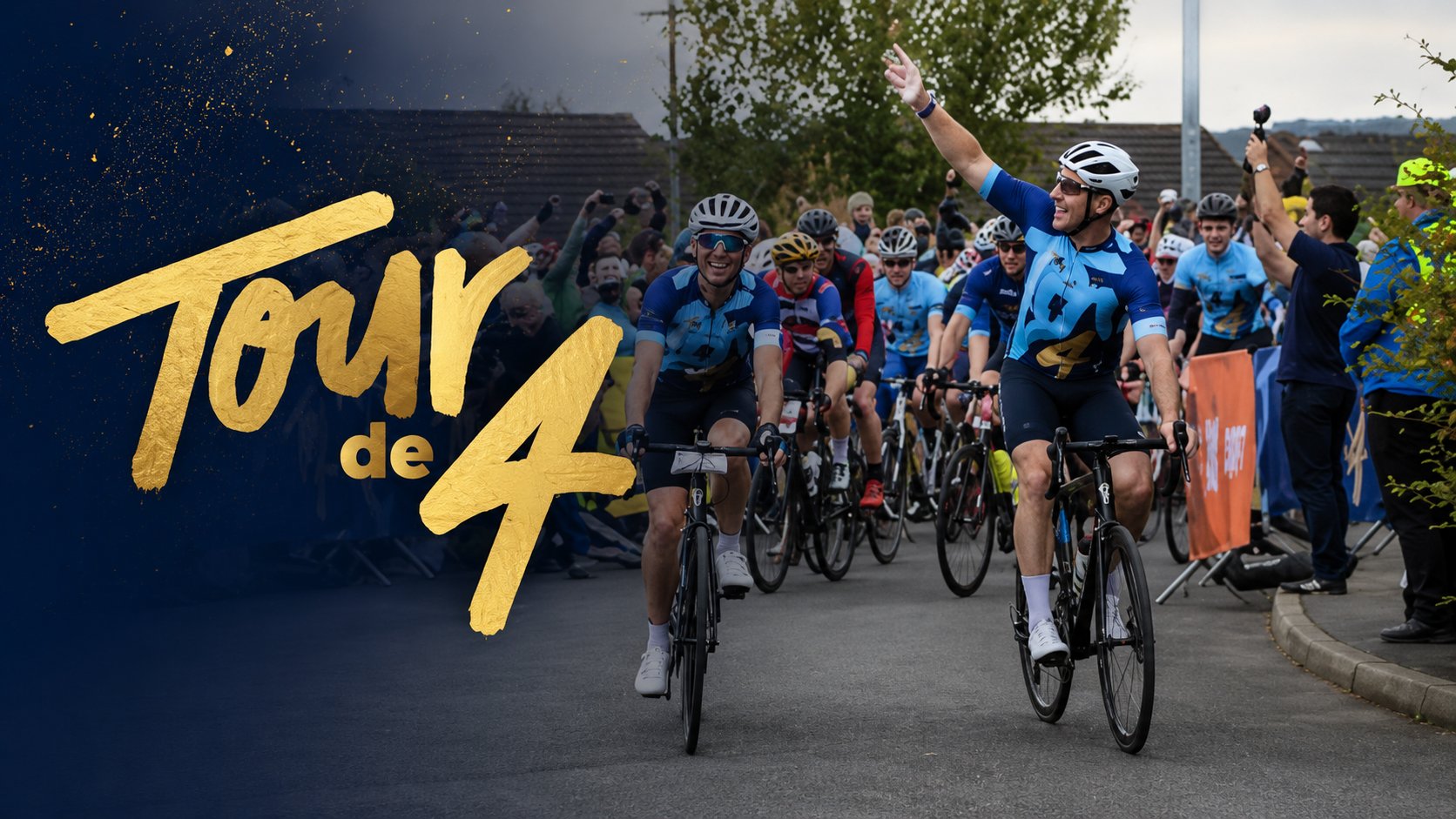
I've signed up for the Tour de 4.
For anyone who doesn't know what that is — it's a charity bike ride organised by Sir Chris Hoy, who was himself diagnosed with stage 4 prostate cancer. The whole point of it is to show that people living with stage 4 cancer can still do things. Still push themselves. Still get out there and live.
I've signed up for the red route. 56 miles.
A few years ago, 56 miles would have been a Sunday afternoon ride. Fairly straightforward. Now it's going to be a genuine challenge — and I am absolutely here for it.
This is what No Time For Beige is all about. Defiance. Not lying down. Not letting the diagnosis become the whole story. Signing up for a 56 mile bike ride with stage 4 cancer is a statement — to myself as much as anyone else.
I haven't looked at how many hills are on the route yet. I'm not ready to know that information.
Where I am right now
Currently I'm managing around an hour on the bike at a time. The event is going to take me somewhere between three and four hours depending on the terrain. So there is a significant gap between where I am and where I need to be — and twelve weeks to close it.
This Sunday I rode 25km. That's my current baseline for the long ride. I'm going to build that steadily week on week until I'm hitting 80km — there's a coastal route near me that's fairly flat and I used to do it in around three hours. That's the target. Get back there.
The 12 week target
Current long ride
Target long ride
Weeks to get there
The weekly plan
I've restructured my whole week around the event. Catherine is joining me for the gym sessions which is brilliant — it keeps things interesting and means I need to mix the workouts up a bit so she doesn't get bored. The structure stays the same — 30 seconds on, 30 seconds off — but I'm swapping exercises around to keep it varied while still hitting the same muscle groups. The squats and lunges in particular are going to be invaluable for cycling strength.
Swimming
Swimming is going to be more sporadic during this training block — if I go it'll be on a gym day, just a gentle recovery swim of around 500m or 20 minutes. Nothing that adds to the training load, just something to keep things moving and help the legs recover.
Fuelling differently
One thing that's going to have to change is the intermittent fasting. You simply cannot ride for three or four hours in a fasted state — well, you can for an hour perhaps, but beyond that your body needs fuel and trying to push through without it would be counterproductive and potentially dangerous. So on long ride days food comes first, fasting goes out the window.
After the rides it's all about refuelling properly — carbohydrates to replenish glycogen stores, protein to support muscle recovery. This is probably the one time in my diet where I'll actively be seeking out more carbs rather than trying to limit them.
There's something almost amusing about a man who spends half his time writing about cutting carbs and sugar now actively planning to eat more of them. But context matters. Fuelling a long ride is a very different situation to sitting on the sofa.
The unknown
I'm genuinely excited about this. But I'm also realistic. This is going to push my body in ways it hasn't been pushed since before the diagnosis — and I don't know exactly how it will respond. The treatment affects my energy levels, my recovery, my feet. All of those things will be factors on a 56 mile ride.
The plan is to listen to my body above everything else. Gym sessions can be dropped if I'm not feeling the energy. Ride distances can be adjusted. The goal isn't to follow the plan perfectly — it's to arrive at the start line in September ready to do 56 miles on a bike with stage 4 cancer.
Roll on September. 🩷
As always — this is my personal training approach and is not medical advice. Please speak to your oncology team before significantly increasing your exercise load, particularly if you are on active cancer treatment.
— Nick